
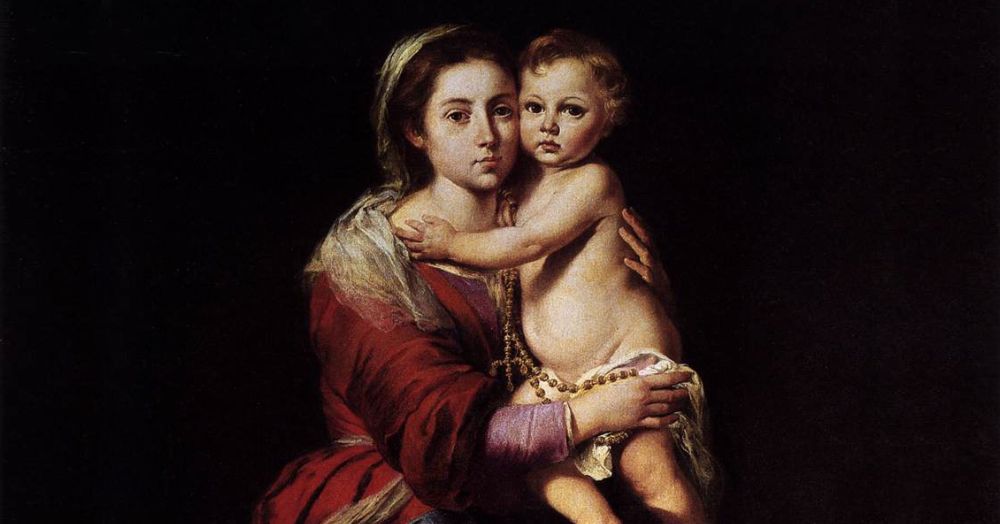
Rosary Meditations
for the Journey
Lines with black triangles will expand to reveal hidden text and headings.
Copyright Page
Copyright © 2024 VW Malzahn
Published by VW Malzahn, AKA Vincent William Malzahn
All rights reserved.
No part of this book may be used or reproduced in any manner whatsoever without written permission, except in the case of reprints in the context of reviews. Written permission may be obtained from
VW Malzahn via [email protected]
Paperback ISBN: 9798877462823
Cover design by VW Malzahn; interior design by VW Malzahn.
Image credits at the end of the book.
Paladin Small Church Communities
www.paladins.us
FIRST EDITION
Excerpts from the English translation of the Catechism of the Catholic Church for use in the United States of America Copyright © 1994, United States Catholic Conference, Inc. — Libreria Editrice Vaticana. Used with Permission. English translation of the Catechism of the Catholic Church: Modifications from the Editio Typica copyright © 1997, United States Conference of Catholic Bishops—Libreria Editrice Vaticana.
Scripture texts in this work are taken from the New American Bible, revised edition © 2010, 1991, 1986, 1970 Confraternity of Christian Doctrine, Washington, D.C. and are used by permission of the copyright owner. All Rights Reserved. No part of the New American Bible may be reproduced in any form without permission in writing from the copyright owner.
Scripture quotations annotated are from] The Catholic Edition of the Revised Standard Version of the Bible, copyright © 1965, 1966 National Council of the Churches of Christ in the United States of America. Used by permission. All rights reserved worldwide.
Scripture quotes not citing the Bible edition are from the NABRE. Scripture quotes from the RSVCE and CPDV versions are thus cited.
NABRE = New American Bible Revised Edition; CPDV = Catholic Public Domain Version; RSVCE = Revised Standard Version Catholic Edition
CCC = Catechism of the Catholic Church RVM = ROSARIUM VIRGINIS MARIAE, apostolic letter of St. John Paul II
Rosary Meditation Guide
Praying the Rosary
Beloved Rosary
The house is quiet as you sit in your recliner with this book and your morning coffee. After reflecting on a Rosary mystery, you talk with Jesus, eyes closed, setting aside the world and feeling His closeness.
The Rosary holds a special place in the hearts of Catholics. Praying the Rosary helps focus our minds and hearts on God and His great love for us. While many promises are associated with the Rosary, there is no magic involved. It’s not just reciting the prayers that infuses it with power; it’s meditating on the lives of Jesus and Mary, focusing on the Gospel with them, that opens us to abundant grace. This meditation becomes more meaningful as it delves deeper into the mysteries. Short readings and meditations on these mysteries, especially when applied to our lives, can help us receive more from this prayer time. We examine each mystery more closely, growing in our understanding and appreciation of God’s love.
One of the Rosary’s strengths has always been its simplicity. You didn’t need a prayer book or even to know how to read—just a Rosary, or even your ten fingers, would do. Today, most people can read and can easily access a prayer book, often on their handy cell phone. Yet, the same phone that delivers prayers also buzzes endlessly with texts, notifications, and reminders, breaking our focus again and again. In this busy world, prayer can become another item on a checklist, quickly hurried through amid interruptions. Thus, it is timely and necessary to focus more on deeper meditation, using tools like this one, to reclaim that quiet connection with God amid the distractions of modern life.
Praying the Rosary Well
Some pray the Rosary by just saying the words. I’ve met people who are proud of their daily Rosary but admit they don’t meditate on the mysteries—they just recite the prayers. This calls to mind the “vain repetition” Jesus warned against and why some Protestants view the Rosary as empty repetition. But repetition is not the real issue. When we allow the familiar prayers to become a gentle rhythm, our hearts can find stillness and focus. Within this rhythm, we draw near to Our Lord and the Blessed Mother, imagining the scenes of the mysteries, gathering spiritual treasures. The Rosary becomes an encounter, not just words. Even when our minds wander, the mysteries invite us to meditate and come closer. Of course, simply saying the words can have value when we bring our intention and desire for God, but the heart of the Rosary is found in pondering its mysteries and letting them draw us into a genuine relationship.
Some people find praying the Rosary difficult, whether they are new to it or experienced. Often, they picture the same vague images each time, and some have trouble going deeper while saying all those Hail Marys. It seems to me that visualizing the scenes and applying them to our lives would be the normal approach to the Rosary. It also seems to me that mentally wrestling with deeper concepts would be quite difficult while saying the Hail Marys. This is why we encourage further reflection on the material after the Hail Marys, followed by a heartfelt discussion with Christ about it.
To pray the Rosary well, we must engage our minds and hearts with its mysteries. This book exists to help deepen your prayer, moving beyond just repeating words and even deep consideration to fostering real conversations with Jesus and Mary.[1] The guidance within will help you explore, reflect, and build greater intimacy each time you pray.
Creative Flexibility
Praying the Rosary with these meditations will take more time. A standard 5-decade Rosary takes about 20 minutes; with this method, 2 mysteries might take 25 minutes, and all 5, about 55 minutes. Some people save time by saying fewer Hail Marys, sometimes just one per mystery. I call this a “beadless” Rosary, not counting prayers. The main goal is to meditate on the mysteries, so adjust as needed to fit your time and spiritual needs.
Some of you may question any addition or change to your Rosary; however, variations are quite common and helpful. While the traditional Rosary consists of 5 decades within a single category of mysteries—Joyful, Luminous, Sorrowful, Glorious—many people pray the finger Rosary, which covers just one decade. Others say the entire 20 decades (covering all 4 categories of mysteries) in one sitting! There are also completely different versions of the Rosary, like the Franciscan Crown seven-decade Rosary. This version features very different mysteries and focuses more on Our Lady’s life. And there are other variations as well. So, clearly, there’s no problem with choosing to say only two or three mysteries to focus on them more deeply.
Reducing the number of Hail Marys to allow more time for meditation is a newer idea. Counting beads is usually a big part of praying the Rosary, and using an unusual number of Hail Marys might seem confusing. Still, I believe that the readings and meditations will help us focus on the mysteries even more than just reciting the prayers. The main thing is to go deeper into the mysteries. We still encourage you to say the Hail Marys. Try to picture the mystery as you say them; then use the readings, meditations, and images to reflect more deeply; and finally, talk with Christ about it. But feel free to adjust the number of Hail Marys if that works better for you.
You may wonder if you’re ready for this deeper way of praying the Rosary, or even for the traditional way. Don’t worry—this book guides you step by step. All you need is a basic understanding of the faith, a desire to know Christ, and knowledge of the main prayers (the Sign of the Cross, the Our Father, the Hail Mary, and the Glory Be). Most Catholics will do just fine.
Before the Rosary material, we’ll discuss St. Teresa’s meditation method and then explain how to use this book with your Rosaries. Take your time—it’s manageable.
Meditation
Confusion Over Meditation
St. Teresa of Avila taught that meditation “is nothing else than an intimate sharing between friends.” Indeed, meditation is primarily a conversation with Christ.
A conversation isn’t usually what we think of when we hear the word “meditation.”
St. Teresa and many other saints say that meditation is much more than just thinking or reflecting, what the saint calls the consideration. For them, it is mainly a heartfelt conversation with Christ—a real heart-to-heart with Him. This conversation is the main focus and purpose of meditation; our thinking and reflecting are meant to inspire and energize this talk with Christ. St. Teresa teaches that as we improve, we’ll spend less time with the consideration and more time in conversation with Jesus.
So, while saints like St. Teresa of Avila and St. John of the Cross teach that meditation is mainly a loving conversation with Christ, many Catholics still see meditation as just thinking or reflecting—the consideration.
To make things more confusing, even the Catechism at times suggests meditation is only this prayerful consideration of material, more a quest to understand than a heartfelt conversation. Even books that agree with St. Teresa often call the whole process “mental prayer” and use “meditation” to only refer to the consideration.
Most people who pray the Rosary stop at the consideration and fail to continue onward to the heart-to-heart conversation with Christ. Before you read further, ask yourself: Do you usually stop at the consideration, or do you go on to a real conversation with Jesus? Noticing your habits can help you see how this practice could become richer. To support your reflection, consider the following questions:
- Do I find myself speaking with Jesus in a personal way after reflecting on a mystery, or do I tend to simply think about the story and then move on?
- Do I ever pause after the consideration to share my thoughts, feelings, or needs directly with Him?
- When was the last time I felt I was truly conversing with Christ, rather than simply thinking about Him or His life?
- Do I notice a sense of intimacy, affection, or peace as I continue to pray, or does my prayer remain primarily intellectual or routine?
These signs can help you see if you’re moving into a deeper conversation with the Lord. You’re free to use this book and the meditations however you like, and you’ll still benefit from just the consideration. But we encourage you to allow a heart-to-heart conversation with Jesus to grow out of each consideration. At the end of each mystery, we add the reminder: “Consider the material, discuss it with Jesus, and praise Jesus” to help you use this method.
The 5 Steps of Teresian Meditation
- Preparation: Slow down, quiet yourself, and bring yourself into God’s presence. Offer a brief prayer and consider Christ’s nearness, especially within your soul. This is often quite brief.
- Material: Choose a passage from the Gospels or a spiritual book as your starting point for meditation. Slowly and prayerfully read the material. For our purposes, you will select a mystery of the Rosary and decide how to approach it using this book (more on that a little later).
- Consideration: Close your eyes and reflect on the chosen material using your mind to understand it and, more importantly, allowing your heart to be moved by it, thus fostering the conversation with Jesus. The consideration should continue until it has provided you with sufficient affections and spiritual themes for the conversation with Christ, its goal.
- Conversation: Have a direct, loving, and informal conversation with Jesus about the consideration. Express love, adoration, and petitions; at times, simply sit with Jesus and enjoy His company, being receptive to His grace. This is the heart of Teresian meditation (mental prayer). Each conversation may only be a few minutes (more on the conversation below).
- Conclusion: Thank Christ for the prayer time and make a small resolution to apply the meditation to daily life.
The Consideration
Sometimes people get stuck with the consideration, especially early on. They may have trouble homing in on a theme for their meditation. It seems to me that this would largely depend on your experience with meditation and the material. Some Gospel passages might not have an obvious theme, or at least not one that draws you to it. You might encounter such difficulty reading our mystery introductions. On the other hand, it seems to me that other material—well-focused meditations on an already chosen theme—would make the focus self-evident and require very little consideration. The “Going Deeper” meditations would be such meditations.
There are two common methods to help with the consideration when you’re having trouble. These can be very helpful, especially with the general mystery texts, which are mostly Gospel verses. Still, it’s best to stay flexible and not rely too much on any one method. Use whatever works for you right now.
The first and most common method is to imagine yourself in the scene from the reading—you might picture being one of the shepherds at the Nativity or St. John at the cross. There’s no single right way to imagine a Gospel scene. Your imagination is a gift from God, and however you picture the moment, it is meaningful. Some people see vivid images, while others just get a faint sense of the scene. Give yourself the freedom to imagine without worrying about being perfect or exact. This method is especially helpful for Gospel scenes, though you might not find it as useful for more conceptual themes.
The second method is called the seven circumstances. It involves asking questions like who, what, where, when, how, why, and with what help. For example, if you’re thinking about “The Crown of Thorns,” you might ask: What is Jesus feeling right now? Why does He stay calm? How would I react in His place? What can I learn from how He responds?
You might begin by imagining the scene, then move on to asking the seven questions. Sometimes, just picturing yourself there and asking a few questions is enough. Other times, something in the reading might catch your attention right away, so you don’t need either method.
No matter which method you use, keep reflecting until something stands out to you—something you want to talk to the Lord about.
The Conversation
Finally, we begin the heartfelt conversation with Christ, the heart of our meditation. Our conversation centers on the themes we unearthed during our consideration, though we should not feel restricted to them. Conversations may certainly branch off, though we should remain generally focused on relating the mystery to our Journey to God.
This conversation should be direct and personal, like talking with a close friend. Even if you thought about deep spiritual ideas during your reflection, your conversation with Jesus should feel natural and relaxed. At the same time, we are to honor Our Lord with our worship and thanksgiving, while also directing our conversation toward contrition for our failings and petition for growth as children of God. Your consideration should have stirred up real affection for the Lord, and you should express that in your conversation.
To make this idea more concrete, here is a sample two-minute conversation after considering a mystery:
“Jesus, I am thinking about how gentle and patient You remained during the Crowning with Thorns. They tortured and mocked You—the Lord of the universe—and yet You did not respond with fear or pleading—with anger or threats. You calmly prayed for them; You suffered for them. [Pause to listen.] I often become annoyed and indignant over the smallest things, while You, the King of kings, patiently endured all things for love of me—for love of those who tortured You. I know I often lose my temper over small things. [Pause to listen.] Please help me to be more patient like You, even when others annoy or misunderstand me. I want to love as You do. Thank You for staying so close to me, even when I am weak. I love You and trust that You will help me grow. Is there anything You want me to notice today, Lord? [Pause to listen.] Thank You for being near; I place all my worries and hopes in Your hands. All praise and honor and glory are yours now and forever.”
Notice that your conversation can be honest, simple, and heartfelt, while still being reverent. Your words will be your own.
Remember, this conversation isn’t a monologue. You don’t need to talk nonstop—it’s better to pause and reflect on the Lord’s presence, His knowing smile, and His gifts of inspiration and grace. Sometimes, you might even perceive words from Him planted directly on your heart while you pause to receive in His grace. Your consideration and conversation with Christ might be more of an affectionate reminiscence than always finding new pearls of wisdom to ponder! And remember, these conversations are always meant to support your Journey to God: you should discuss ways of applying the consideration to your life.
Ideally, your conversation will last at least a few minutes. Over time, the conversations tend to get longer, while the considerations tend to get shorter. Remember, the consideration is just to feed the conversation, so don’t spend more time on it than you need. The conversation is the main part of meditation and should go on as long as it’s fruitful. Of course, you might have time limits, especially if you’re meditating on all five mysteries.
Patience and Perseverance
Patience and perseverance are needed to succeed in meditation, just like with anything worthwhile. If you’re new to meditation or trying a new method, expect some challenges. Some saints have said it can take up to a year to really succeed at meditation—and they meant this as encouragement! You’ll likely find joy and benefits much sooner, but it might take months or even a year before meditation becomes the highlight of your day instead of just a duty.
Meditation is essential for spiritual growth. It’s not something to try for just a week to see if you like it. We need to make a strong commitment to grow in our relationship with the Lord and be ready to face any challenges that come up. It’s good to figure out what works best for you, but don’t give up on meditation, no matter how hard it gets.
The biggest challenges to patience and perseverance in prayer are dryness and distractions. These are normal and happen to everyone, from the greatest saints to the greatest sinners, as they try to grow closer to Christ.
When we get distracted, we should just gently bring our minds back to God. Often, that’s all we can do, so don’t be too hard on yourself. Still, we should try to avoid distractions whenever possible. Involuntary distractions are not sinful, but if we choose to give in to them, they can be. It’s wise to do what we can to avoid them. Try to stay healthy and rested, quiet your mind before prayer, and set up a time and place where you can pray without interruptions.
Dryness—unfulfilling prayer—is also common. Sometimes, we just need to grow in our prayer life to enjoy this time with the Lord more. Other times, the same things that distract us can also make prayer feel dry. It’s important to remember that spiritual struggles outside of prayer can affect our prayer life too. Our whole life and how we focus on God throughout the day shape our relationship with Him and our prayer life. Practices like remembering God throughout the day, letting go of attachments, and engaging in spiritual reading help strengthen our prayer life. Sometimes, dryness in prayer is God’s way of purifying us. When the good feelings are taken away, we have a chance to pray more selflessly, just to please God. Sometimes this dryness is a sign to move to a deeper kind of prayer, but that’s beyond the scope of this book.
Spiritual Growth
It’s important to remember that the benefits of meditation often show up in our daily lives. For example, after contemplating the Crowning with Thorns, you might feel inspired to be more patient and gentle when you’re frustrated. If you’re stuck in traffic, instead of getting impatient, you could offer that moment to God and practice patience as Christ did. In this way, meditation helps turn everyday moments into opportunities for spiritual growth.
Over time, we should notice progress in our meditation. Our time with the Lord should feel richer and more meaningful. We’ll still face daily distractions and sometimes dryness, even if we try our best. Dryness can last a while, but as long as we keep praying and practicing our faith, we’ll keep growing.
Remember, the real measure of our spiritual health is our growth in virtue. As long as you see yourself growing in virtue—or at least not slipping backward—you’re doing well, even if things are hard. The virtues are the only reliable way to judge spiritual progress.
I recommend Conversation With Christ by Peter Thomas Rohrbach for a short yet excellent book on meditation according to the method of St. Teresa of Avila.
Using This Book
Saying the Rosary
This book will help you get more out of your Rosary with introductions, meditations, prayers, and images. These will help you reflect more deeply on the mysteries and prepare for a real, meaningful conversation with the Lord. You won’t have to look for prayers—everything you need is included for each mystery.
Our primary focus is on the material for the consideration. We introduce each mystery in the “The Mystery” section; this is the general overview of the mystery and consists primarily of passages from the Gospel. You can choose a brief or detailed version. Then, in the “Going Deeper” section, we provide four meditation options for each mystery, along with meditation starters if you prefer to pray with one of these instead. Both “The Mystery” texts and the “Going Deeper” meditations are read prayerfully, guiding you into the consideration. “The Mystery” section is more general and introductory, while the “Going Deeper” meditations (including the meditation starters) are more focused, offering a specific theme or starting point. Typically, you will either focus entirely on the detailed version of “The Mystery,” discovering your own theme, or you will start with “The Mystery” and then move on to the “Going Deeper” section, using the theme provided there.
You’re almost ready, but there are five choices to make before you start the Rosary:
- Choose your intentions for your Rosary; the conversion of sinners (including ourselves) is often at the top of the list.
- Select which mysteries to pray. You may decide not to pray all 5 mysteries due to time constraints. The Joyful Mysteries are usually recited on Mondays and Saturdays; the Luminous Mysteries on Thursdays; the Sorrowful Mysteries on Tuesdays and Fridays; and the Glorious Mysteries on Wednesdays and Sundays. You are not required to follow this schedule.
- Decide how many Hail Marys you will say for each mystery. While 10 is standard, you can opt to say fewer, as you are devoting more time to the provided meditations. You might say only one per mystery.
- Pick either the brief or detailed version of “The Mystery” text to prayerfully read. If you choose the detailed version, you may focus on it for your consideration and skip the “Going Deeper” section. Normally, you will choose the brief version if using the “Going Deeper” meditations.
- Select a meditation or meditation starter from the “Going Deeper” section if not focusing on “The Mystery” text alone.
You might find other ways to use this material, but this is a good place to start. Also, we encourage you to use the images in the book—they can help with your consideration, too.
Some of you may enjoy praying the Rosary in a group. You can use this book together, but I suggest a few guidelines to help things go smoothly. Instead of focusing solely on “The Mystery,” have the group use the “Going Deeper” meditations to keep the consideration more focused and the timing more consistent. The “Going Deeper” meditations provide a theme and require very little consideration. Also, set a specific amount of time—maybe 3 or 4 minutes—for the brief consideration and internal conversation with Christ. While a set time isn’t ideal, it helps everyone know what to expect and still have a meaningful experience.
Additional Materials
This book also contains additional prayers beyond the reflections, meditations, and Rosary prayers. It includes some of my own prayers as well as my versions of common prayers. I hope you find them meaningful.
As always, I encourage you to focus on meditation, contemplation, and otherwise “diving deeper”—rather than just saying prayers out loud—though vocal prayers are important as well. I especially recommend praying the Morning Offering and the Examination of Conscience every day. Feel free to add your own thoughts, reflections, and praise as you go.
There are also more images included with the extra prayers. These are mostly my “prayer places.” Sometimes, you can pick a prayer place and imagine being there with Jesus, talking with Him, and then spending some quiet time just enjoying His presence.
Version Note: The full-color paperback version includes many more images, many of which are AI-generated, AI-reimagined, or otherwise improved. Also, only the print version includes the images for the extra prayers—my “prayer places.”
[1] We will, from here on, refer to the conversation as being with Christ; however, it may often enough be with The Father, Holy Spirit, Our Lady, or even occasionally with St. Joseph or one of the other Gospel saints.
Beginning Prayers
Blessed Mother, please join me in praying the Holy Rosary. Let us pray for the following intentions…
The Sign of the Cross…
Apostles’ Creed
I believe in God,
the Father almighty,
Creator of heaven and earth,
and in Jesus Christ, his only Son, our Lord,
who was conceived by the Holy Spirit,
born of the Virgin Mary,
suffered under Pontius Pilate,
was crucified, died and was buried;
he descended into hell;
on the third day he rose again from the dead;
he ascended into heaven,
and is seated at the right hand of God the Father almighty;
from there he will come to judge the living and the dead.
I believe in the Holy Spirit,
the holy catholic Church,
the communion of saints,
the forgiveness of sins,
the resurrection of the body,
and life everlasting.
Amen.
Our Father…
May I grow in Faith, ever trusting more fully: Hail Mary…
May I grow in Hope, ever seeking and persevering: Hail Mary…
May I grow in Love, ever giving more generously: Hail Mary…
Glory be…
All 20 Mysteries Index
The Joyful Mysteries
The First Joyful Mystery: The Annunciation
The Second Joyful Mystery: The Visitation
The Third Joyful Mystery: The Nativity
The Luminous Mysteries
The First Luminous Mystery: The Baptism of the Lord
The Second Luminous Mystery: The Wedding at Cana
The Third Luminous Mystery: The Proclamation of the Kingdom
The Fourth Luminous Mystery: The Transfiguration
The Fifth Luminous Mystery: The Institution of the Eucharist

ROSARY MEDITATION NOTES
Some text is bold for emphasis; when quoted material is bold, it has been added.
PAINTING: “Virgin and Child with a Rosary” by Bartolomé Esteban Murillo (1617–1682), public domain, widened from original (this page).
by
Tags: